

Parameter des RFID-Stahlmaterialmanagement-Anwendungsschemas.
- Bauzeit: 1 month
- Warranty period: 1 year
- Case City: Sichuan Province/Mianyang City
Chapter 1. Systemübersicht
1.1 Background introduction
Momentan, mit der Strukturanpassung und der Verbesserung der Produktionskapazität vieler Eisen- und Stahlunternehmen in meinem Land. The logistics volume of iron and steel enterprises occupies an increasing proportion of the total domestic logistics. For iron and steel enterprises, the prices of upstream products such as raw materials and fuels remain high. With the increasingly fierce competition in the iron and steel industry. The establishment of a steel plant logistics information management system. Has gradually become an important issue in the development strategy of iron and steel enterprises.
Although MES, ERP and other management information systems bring great convenience to the management of enterprises. And bring obvious economic benefits to enterprises. jedoch, due to the lack of a large amount of basic information. In the bottom production, manufacturing and management process of the reservoir area. It is difficult to provide timely feedback on the production situation and inventory situation. Deshalb, the management link and the production link cannot conduct good two-way information exchange. Resulting in the phenomenon of information islands and faults. Which restricts the development of enterprise information integration.
Stahlmanagement 1
1.2 Demand Analysis
1.2.1 Whole process material tracking
Track the basic information of the whole process. (Including material batch number, material number, Gewicht, production number, processing purpose. Production bundle number, order number, technical requirements, and delivery status and logistics information.) For the materials used in the processing process.
1.2.2 On-site material inspection function
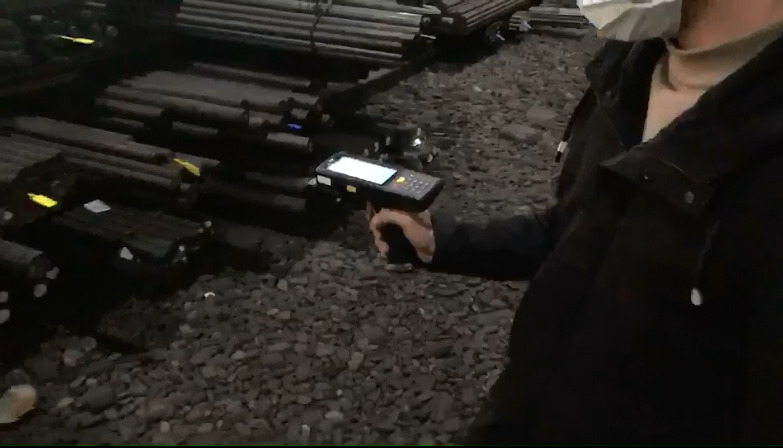
Inspection personnel regularly inspect materials through handheld RFID readers. Real-time understanding of on-site production, logistics and warehousing actual conditions, and real-time records. Upload the RFID intelligent production logistics management system for record keeping. There is information, location and records for all production materials.
1.2.3 Production planning command and dispatch
For the production and logistics plans that have been formulated and the production and logistics plans that have been added temporarily. The most reasonable suggestions and the most simple implementation methods are given to the field operators.
1.3 Design principles
Combined with the current technological development status and trends, we strictly follow the following principles in the system design process.
1. Economical
Make full use of mature advanced technology. Base on wireless radio frequency technology (RFID passive tag), um die hohe Kostenleistung des Gesamtsystems sicherzustellen. Die Software erfüllt die Managementanforderungen, Die Benutzeroberfläche ist benutzerfreundlich, leicht zu pflegen. Und das gesamte System ist einfach zu bedienen und praktisch.
2. Zuverlässigkeit
Das System integriert in höchstem Maße heimische Spitzentechnologie und Komponenten. Und nutzt ausgereifte Technologie, um die instabilen Faktoren des Systems zu reduzieren. Die Hardware, Betriebssystem, Netzwerk, und Datenbank im System so detailliert wie möglich gestaltet. Behebung der Fehler, um eine schnelle Wiederherstellung des Systems sicherzustellen. Das System nutzt fehlertolerante Technologie, um die Zuverlässigkeit des Systems zu verbessern.
3. Fortschrittlich
Unter der Voraussetzung der Systemzuverlässigkeit, Auch die Weiterentwicklung ist entscheidend. Die Netzwerkplattform des Systems, Hardware-Plattform, and system software platform technology represent the development direction of today’s computer technology. And have been proved to have strong practicability through practice. Which is in line with the development trend of today’s computer science.
Each platform of the system provides a secondary development interface. Which can ensure that various technologies can update and upgrade to maintain the advanced nature of the system.
4. Sicherheit
The system has the ability to prevent computer viruses, has strong anti-interference ability. And has passwords, diary record operation actions, usw. To avoid malicious attacks and illegal data extraction and use, and to ensure system network security.
5. Scalability
In the design and selection of system software and hardware, we fully consider its scalability. And the system structure is easy to expand to adapt to the larger task load that may appear in the future. The hardware platform is upgradeable. When necessary, new computer equipment can add to work together with the original computer equipment. To improve the processing capability of the system and ensure full utilization of the original resources.
6. Normative
Since this system is a strict and comprehensive system. We refer to various standards and specifications during the design and construction of the system. Strictly comply with various technical regulations. And do a good job in the standardized design and construction of the system. Everything starts from reality, so that the intelligent system has high practical efficiency.
7. Ease of maintenance
It adopts the industry-wide easy-to-maintain system platform. The application software has a friendly interface. And the installation, use and maintenance are simple and convenient. The business process is clear and conforms to the routine business processing habits. The system data maintenance is convenient, and the backup and data recovery are fast and simple. The system software configuration is simple and convenient, try to avoid complex system configuration files.
Chapter 2. Overall Design
2.1 Scheme Architecture
This solution adopts a hierarchical. Functional service modular system architecture to meet the linear expansion requirements of business applications and processing capabilities. The overall structure of the program is as follows:
2.2 Features of the program
2.2.1 High real-time performance
Das gesamte System von der Front-End-Erfassung bis zur zentralen Datenverarbeitung ist auf der Grundlage hoher Echtzeitaspekte konzipiert. Datenerfassung in Echtzeit, Echtzeit-Upload, und Echtzeit-Feedback. Zur selben Zeit, Es zeigt den Produktions- und Logistikstatus in Echtzeit für Materialien mit normalem Produktionsstatus oder Logistikstatus an. Und bietet eine Frühwarnung bei Materialien mit abnormalem Produktionsstatus. Oder den Logistikstatus ohne manuellen Eingriff und bietet den Bedienern vor Ort die richtige Betriebsgrundlage.
2.2.2 RFID-Radiofrequenzidentifikation
Eine hochmoderne Identifizierungsmethode.
Dieses System nutzt die fortschrittlichste Internet-of-Things-Technologie. Elektronisches RFID-Tag, als Identifikationsinformationsträger von Stahl, Die Vorteile sind wie folgt:
- Die RFID-Tag-Informationen werden über den eingebauten Chip gespeichert, und die Informationen sind nicht leicht zu verlieren.
- Die RFID-Tag-Informationen werden per Funksignal gelesen, was praktisch ist, schnell und genau.
- Die RFID-Tag-Informationen müssen vom Kartenausgabegerät geändert werden. Und die Autorität kann eingestellt werden, was nicht leicht zu manipulieren ist.
- Realisieren Sie ein hochwertiges Informationsmanagement
Das System besteht aus industriellen RFID-Lesegeräten, Industriesensoren, integrierte Industriecomputer und Datenverarbeitungsserver.
Es gibt zwei Hauptfunktionen:
- Verwirklichen Sie die Funktionen der drahtlosen Schnellerfassung, schnelle Datenübertragung, Datenbankverwaltung und Verarbeitung von Identifikationsergebnissen. Dadurch wird das Niveau der Bestandsinformationsverwaltung erheblich verbessert.
- Die Durchführung einer Inventarisierung per Handheld-Computer ist einfach zu realisieren, Echtzeit- und genaue Verwaltung des Stahlbestands.
- Identifizieren Sie den RFID-Tag des übertragenen Stahls durch Fahren, record the position and time of loading and unloading. And realize the real-time dynamic management of steel transfer.
The RFID anti-metal electronic tags configured in the solution are all customized versions. And the tags contain a global unique code and a special identification defined according to needs. Das ist, only authorized RFID anti-metal electronic tags can be identified by the system equipment. Making the RFID intelligent production logistics management system. It has barrier and uniqueness to protect information channels.
2.2.4 Hierarchical authority management
The system manages user permissions hierarchically. And the system login permissions divides into three levels. Enterprise administrators, general enterprise administrators, and inspectors.
(1) Enterprise administrator authority. Log in to the system with system administrator authority, und haben die höchste Autorität des Systems. Die Systemdaten können hinzugefügt werden, modifiziert, gelöscht, usw. Kann sich nach Informationsstatistiken erkundigen, und kann für Personaldaten gepflegt werden.
(2) Allgemeine Administratorberechtigung des Unternehmens. Sie können Wartungsvorgänge wie das Hinzufügen durchführen, modifizieren, und Löschen der Daten des Systems. Und kann die Arbeit der Inspektoren überwachen.
(3) Inspektorbehörde: Melden Sie sich mit Inspektorberechtigung am System an. Und kann nicht hinzufügen, ändern, oder Daten im System löschen. Kann aber nur mit Alarminformationen umgehen, Fehlerinformationen, usw. Kann Alarmaufzeichnungen durchsuchen, und siehe Gehen Sie zu Ihren eigenen Inspektionsaufgaben und führen Sie statistische Untersuchungen durch.
Chapter 3. Systemfunktionsdesign
3.1 Funktionsübersicht
Der Status Quo:
1) Allgemein, Der Stahl wird mit Kreide oder Papier markiert, PVC-Kunststoff, Aluminiumplatte und andere Etiketten. Die Nachteile sind wie folgt:
- Das Logo lässt sich leicht verunstalten, resulting in information loss.
- It is necessary to identify the information with the naked eye of the personnel. Which is time-consuming and labor-intensive, und ist fehleranfällig.
3. The identification information is easily tampered with.
2) In the process of steel production. The operation scheduling of driving generally issued in the form of voice intercom and manual on-site command. Due to the harsh industrial environment such as loud noise on site. This method has obvious drawbacks and cannot guarantee timely information transmission. It is also accompanied by serious safety hazards. After the material hoisting completed. Since the hoisting results are also recorded and uploaded manually, the results cannot be returned to the management system in time. Resulting in serious lag in inventory information and affecting management efficiency.
3) In der Werkstatt gibt es viele Produktionsprozesse. Und die Prozesse bei verschiedenen Produkttypen sind aufgrund unterschiedlicher Kundenanforderungen unterschiedlich. Deshalb, im Produktionsprozess. Denn es muss manuell unterschieden werden, ob ein bestimmtes Material in einen bestimmten Prozess zur Produktion gelangen kann. Es ist zeitaufwändig und arbeitsintensiv, was die Produktionseffizienz erheblich verringert, erhöht die Betriebskosten, und verringert die Produktqualität.
4) Der Grad der Informatisierung ist nicht hoch.
Momentan, Die manuelle Inventur wird in das Inventarsystem eingegeben. Und die Nachteile sind wie folgt:
- Die Bestandsinformationen können nicht dynamisch in Echtzeit hochgeladen werden, und die Informationen hinken hinterher.
- Manuelle Bestandsstatistiken sind zeitaufwändig und arbeitsintensiv, und sind fehleranfällig.
- Das bestehende System kann den Lagerort der Ware nicht markieren. Dies ist nicht förderlich für die Überprüfung und Suche der Informationen zu den Inventargütern.
Das intelligente RFID-Produktionslogistikmanagementsystem zielt auf die häufigsten Managementprobleme im Produktions- und Logistikmanagement ab. Kombiniert die Entwicklung neuer Technologien wie dem Internet der Dinge und Big Data. Behebt die Mängel traditioneller Managementmethoden, erfordert Effizienz von der Technologie, und vereint “Industrie 4.0” zu erreichen ausrüstung management. Intelligent, visualisiert und nachgezeichnet. Zur selben Zeit, Zur Gewährleistung der Kommunikationsstabilität ist fortschrittliche mobile Internettechnologie integriert. Und Sicherheit der gesamten Lösung, und die folgenden Module sind enthalten.
Automatisches Identifizierungssystem der Stahlnummer.
Drahtloses Dispatching-System zur Fahrpositionierung.
Intelligentes Produktionsmanagementsystem.
Mobiles Bestandsinformationsmanagementsystem.
3.2 Einführung in das automatische Identifikationssystem für Stahlnummern
Das System nutzt die fortschrittlichste Radiofrequenz-Identifikationstechnologie. Nachdem das RFID-Tag auf dem Material angebracht wurde. Das System verknüpft die aktuellen Materialinformationen und die RFID-Tag-Informationen. Und sichert die Bindung zum MES-System. Durch das Lesen der RFID-Tag-Informationen durch das tragbare RFID-Lesegerät oder das stationäre RFID-Lesegerät. Und die lokale Software, Die automatische Identifizierung der Stahlnummer ist endlich realisiert.
3.2.1 Systemarchitektur und -prinzip
Durch manuelles Anbringen des RFID-Tags am Material, Bindung der RFID-Tag-Informationen und der Materialinformationen des manuellen Förderers. Und die Bindung an das MES-System sichern. Das ist, Die vom RFID-Lesegerät gelesenen Tag-Informationen werden in eine Bindungsbeziehung umgewandelt. Eins-zu-eins entsprechende Materialinformationen. [Das automatische Identifizierungssystem für Stahlnummern muss nicht mit dem MES-System kommunizieren. Sichert aber lediglich die Bindungsbeziehung zum MES-System.]
3.2.2 Analyse und Vergleich des Projektnutzens
3.3 Drahtloses Dispatching-System zur Fahrpositionierung;
Basierend auf drahtloser Datenübertragung und RFID-Positionierungstechnologie. Das drahtlose Dispositionssystem zur Fahrpositionierung teilt den Lagerstapelbereich genau auf. Verwirklicht die Verfolgung des Materiallagerungs- und Transportprozesses und der Ergebnisse, erweitert den Unternehmensinformationsfluss auf das Fahrterminal. Und verbessert den Unternehmensspeicherbereich erheblich. Verwaltungsgenauigkeit und Echtzeit.
The whole system is divided into the ground part and the driving part according to the deployment position. Including the system main control computer (including software) and wireless data transmission system. And the main control computer is linked to the MES system through the workshop network. The driving part includes the vehicle terminal (including the driving terminal software) ). And driving is designated as the data acquisition system.
3.3.1 Systemarchitektur und -prinzip
The current position of the crane is determined through a customized algorithm. Through the RFID tag installed on the crane beam and the RFID reading device installed on the crane.
3.4.2 Installation instructions for some processes
Collect
Polished
Finishing
Straighten
Flaw detection
As shown in the figure, the standard antenna position in the figure is the installation position of the RFID fixed reading device. And the incoming sensor. When a material starts to be processed, the incoming material sensor senses that the material enters the feeding port of the processing process. The RFID fixed equipment starts to work, reads the RFID tag on the material being processed. And the intelligent production management system will process information. And material information to the MES system. And the MES system updates the material information in real time. There is no feeling in the entire processing process, the operator only needs to complete the processing process normally. And the data collection work is completed simultaneously when the processing process is completed.
weigh
Während des Verpackungstransferwiegevorgangs, Die RFID-Ausrüstung ist im Bereich der Brückenwaage installiert. Während die Waage arbeitet, um Materialgewichtsdaten zu generieren, Das RFID-Gerät liest den RFID-Tag auf dem Material. Und das RFID-Produktionsmanagementsystem vergleicht die Materialstatusinformationen zu diesem Zeitpunkt mit dem aktuellen Wiegen. Die Daten müssen den Wiegevorgang abschließen. Im Wiegevorgang, Es ist nicht erforderlich, Materialinformationen erneut manuell einzugeben. Und die Informationseingabe und -aktualisierung kann direkt und ohne Gefühl erfolgen. und das Logo kann rechtzeitig gedruckt werden.
3.4.3 Darstellung des Produktionsprozesses vor Ort auf der Kundenschnittstelle
Aktuelle Prozess-Produktionsmaterial-Informationsschnittstelle.
Schnittstelle für Produktionsplanung und Planungsabschluss.
Feed-Korrekturschnittstelle.
SOP, Schnittstelle für Produktionsvorkehrungen.
3.5 Mobiles Bestandsverwaltungssystem
Das mobile Bestandsinformationsmanagementsystem übernimmt das Handheld-Terminal im Lagerbereich mit drahtloser Übertragungsfunktion. Es basiert auf Industriestandards und kann die Anforderungen der Datenerfassung in rauen Umgebungen erfüllen. Es zeichnet sich durch hohe Leistung aus, gute Flexibilität, starke Haltbarkeit und Humanisierung. Das System besteht aus Handheld-Terminals, Server, usw.
3.5.1 Systemarchitektur
3.5.2 Systemfunktionen
Echtzeit-Abfragefunktion. Lesen Sie den RFID-Tag auf dem Material über das Handterminalgerät, und fragen Sie die Materialstatusinformationen in Echtzeit ab.
Lagerfunktion für Fertigprodukte. Lesen Sie die Informationen zum Stahlmaterial über das Handheld-Terminal. Und senden Sie gleichzeitig die Fahranweisungen an den Tablet-Computer.
Reverse-Stack-Verwaltungsfunktion. Geben Sie die Materialnummer ein, Materialinformationen abfragen und anzeigen. Geben Sie Reverse-Stack-Informationen ein, hauptsächlich einschließlich der Zielstapelposition.
Lagerfunktion. Im Lager, Sie können die Stapelpositionsinformationen des Materials direkt über das Handterminal abfragen. Nachdem ich die ungewöhnliche Freude gefunden habe, Sie können den Datensatz direkt auswählen, um den Stapelvorgang durchzuführen. Und schließlich die Materialinformationen in die richtige Stapelposition übertragen. Das Hauptsystem kann die Inventuranweisung erteilen. Und mehrere Handheld-Computer können koordinieren, um die Inventur des gesamten Lagers oder eines Teils des Lagerbereichs abzuschließen.
Ausgangsfunktion für fertige Produkte. Benutzer können die Lieferinformationen abfragen, indem sie die Lieferkarte scannen oder den Lieferschein eingeben. And then carry out the delivery operation by scanning the RFID tag of the steel material.
3.5.3 Partial function interface display.
3.6 Continue to expand services
The system is designed based on an open, flexible and service-based open architecture. Which linearly expanded according to user needs.
On the basis of the standard functions of the platform, other practical functions can be added modularly. During the platform service period, regularly update. Enrich and optimize the system to ensure that the platform application is always one step ahead of the industry.
Chapter 4. Solution Advantages
Relying on the company’s core technology of radio frequency identification. The solution aims to track production materials around the clock without dead end. And strengthen the standardized and unmanned daily management of equipment managers. Durch das raffinierte Management der Materiallogistik. Die Managementeffizienz des Unternehmens kann deutlich verbessert und die Betriebskosten des Unternehmens gesenkt werden.
4.1 Präzise Überwachung–Förderung der Verbesserung der Effizienz des Gerätemanagements
1) Realisieren Sie die Verfolgung von Produktionsmaterialien und die Echtzeitüberwachung von Produktionsprozessen. Dies ist hilfreich für die Früherkennung von Krankheiten.
2) Gewinnung und Analyse von Datenressourcen zur Realisierung einer Frühwarnung, Frühwarnung und Beurteilung von Gerätekrankheiten. Und stellen Sie Informationsunterstützung für Wartungs- oder Austauschentscheidungen bereit.
3) Überwachen Sie die Geräteabteilung effektiv über die Plattform, Verbessern Sie den standardisierten Service für den Lebensunterhalt der Ausrüstung. Informieren Sie die Vorgesetzten über die Inspektion und Wartung von Anlagen und Geräten der Produktionslinie. Verbessern Sie die Integritätsrate produktionsbezogener Einrichtungen. Und so die Produktionseffizienz der Produktionslinie verbessern.
4) Die Arbeit im Anlagenmanagement ist schwer und es mangelt an Personal. Technologie wird eingesetzt, um die Nanny-Service-Methode des Gerätebetriebs- und Wartungspersonals zu ersetzen. Und Big Data wird verwendet, um den Überwachungsdruck der Ausrüstungsabteilung effektiv zu steuern. Zur Verbesserung der Managementeffizienz und -präzision.
Stichwort: RFIDHY Lagerung NFC-Tag RFID-Lösungen


