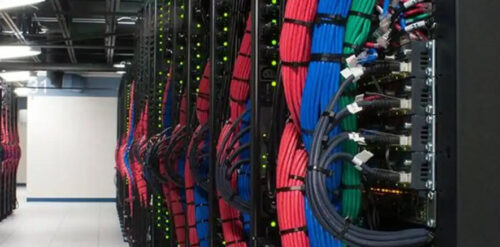
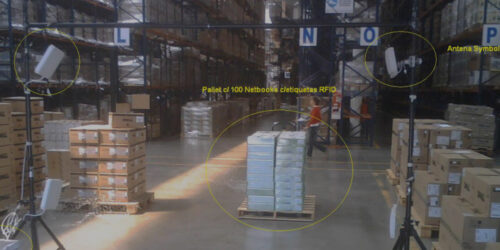
The RFID smart asset management system consists of three main parts: Ultra-High Frequency (UHF) RFID reader system. Multi-directional antenna platform and back-end inventory management system. The smart asset management is a mobile platform that can move freely in all directions. As well as an intelligent multi-directional antenna platform. That can scan multiple RFID tags…
With the help of RFID asset tracking solution, the automatic inventory of assets can accurately realize in a short time. Asset tracking RFID tags must attach to all assets. From servers, racks and laptops to office chairs, carts and even buckets. Instead of identifying assets, locating barcodes. Or scanning assets one by one when taking…
Barcodes and RFID are the two most mainstream forms of labels in logistics and warehousing today. The two label forms are very different. Everyone is familiar with barcode labels, but RFID is relatively unfamiliar. So what is the difference between these two labels? What form of labeling is more appropriate for us to use? Today…
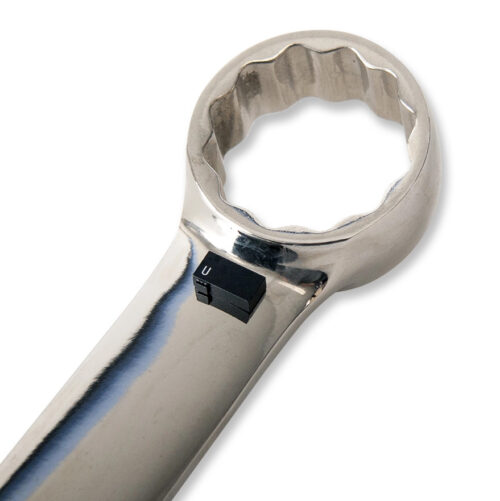
Many times we need to install RFID tags on metal surfaces. The way of installing RFID tags on metal surfaces is completely different from that of ordinary material surfaces. Can normal labels be used on metal surfaces? Many friends do not have such an awareness, and stick RFID wet tags directly on the surface of…
Why put embedded RFID tags inside products? More and more OEM products today have RFID tags embedded directly in the production process. So what are the benefits of doing this? OEM (Product Source Manufacturer) embeds RFID tags in the process of making products. This can not only improve the durability of the product, improve the…
How has cable asset management evolved? Before Until recent years, cable asset management companies relied heavily on manual systems to track their assets. Identifying and recording serial numbers and descriptions manually leased to each customer. Cable asset management is time-consuming and labor-intensive. Unfortunately, this approach to cable asset management is time-consuming and error-prone. Especially with…
RFID chips shortage Problem are Global Nowadays. The shortage of electronic chips has lasted for more than two years. And this may continue. Globally. Whether it is computer chips, car chips or RFID chips. It seems to have entered a long-term state of short supply. There are many reasons for this. The first and foremost…
1. How does an RFID reader work? Let us first explain the basics of RFID. RFID systems basically use 3 components: tags, antennas and readers. Labels usually have an object attached to them. It contains a unique identifier. The antenna detects the tag through the magnetic field it produces. The reader receives the tag information…
UHF RFID tags are an important branch of RFID tags. Passive radio frequency tags divided into low-frequency tags. High-level tags and ultra-high-frequency tags. Low-frequency tags mainly use in simple access control systems. And their reading distance is generally within 20 cm. High-level tags, including NFC series, have good encryption and can be read at close…
Ski resorts RFID technology applications are popular. Traditional ski resort applications mainly focus on logistics inventory management and ski resort RFID ticket management. The relatively new applications include ski resort timing. And the application of fixed-point punch-in technology. With the application of RFID technology in more and more ski resorts. Ski resorts are becoming more…
We use cookies to ensure that we give you the best experience on our website. If you continue to use this site we will assume that you are happy with it.